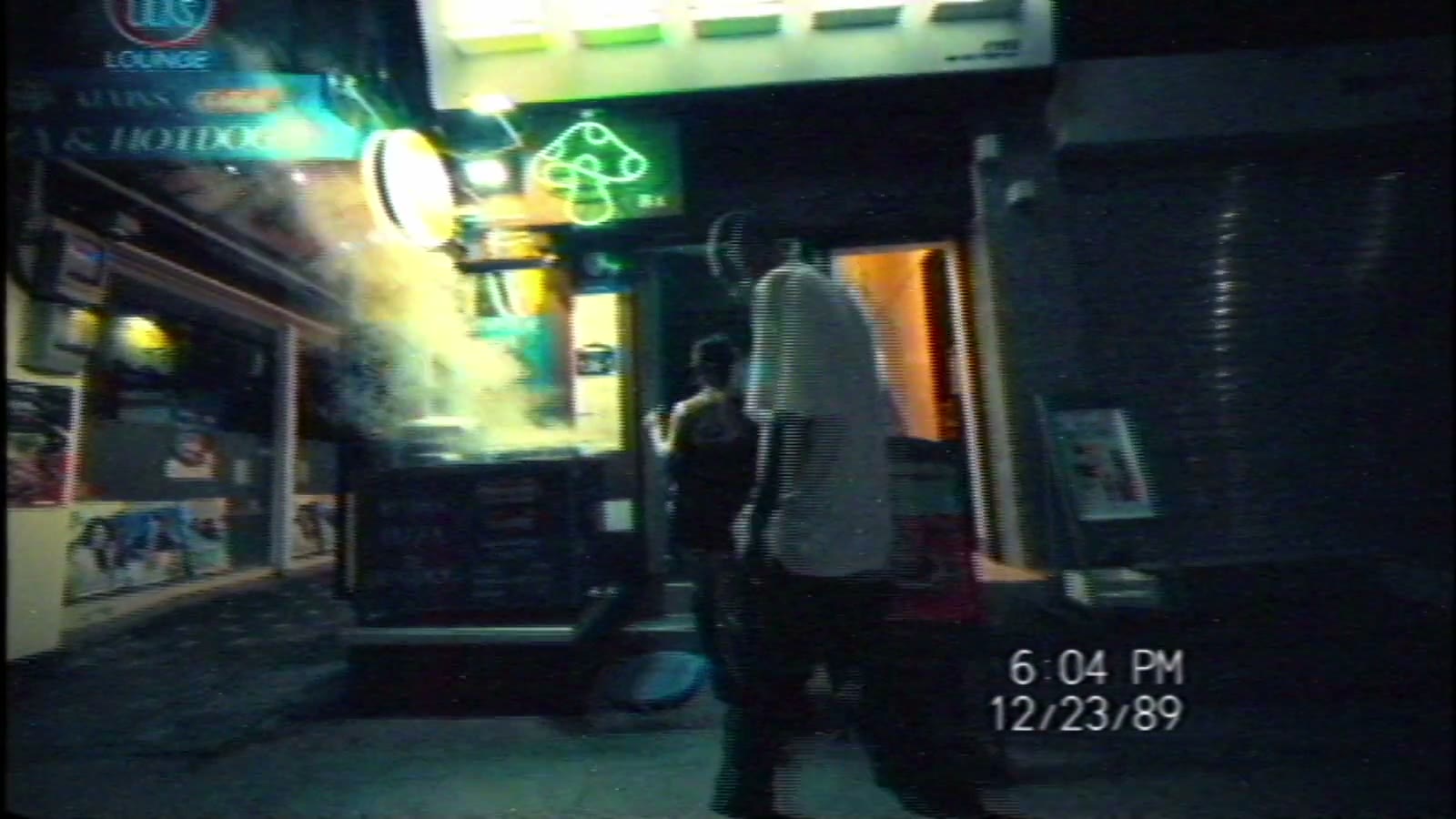
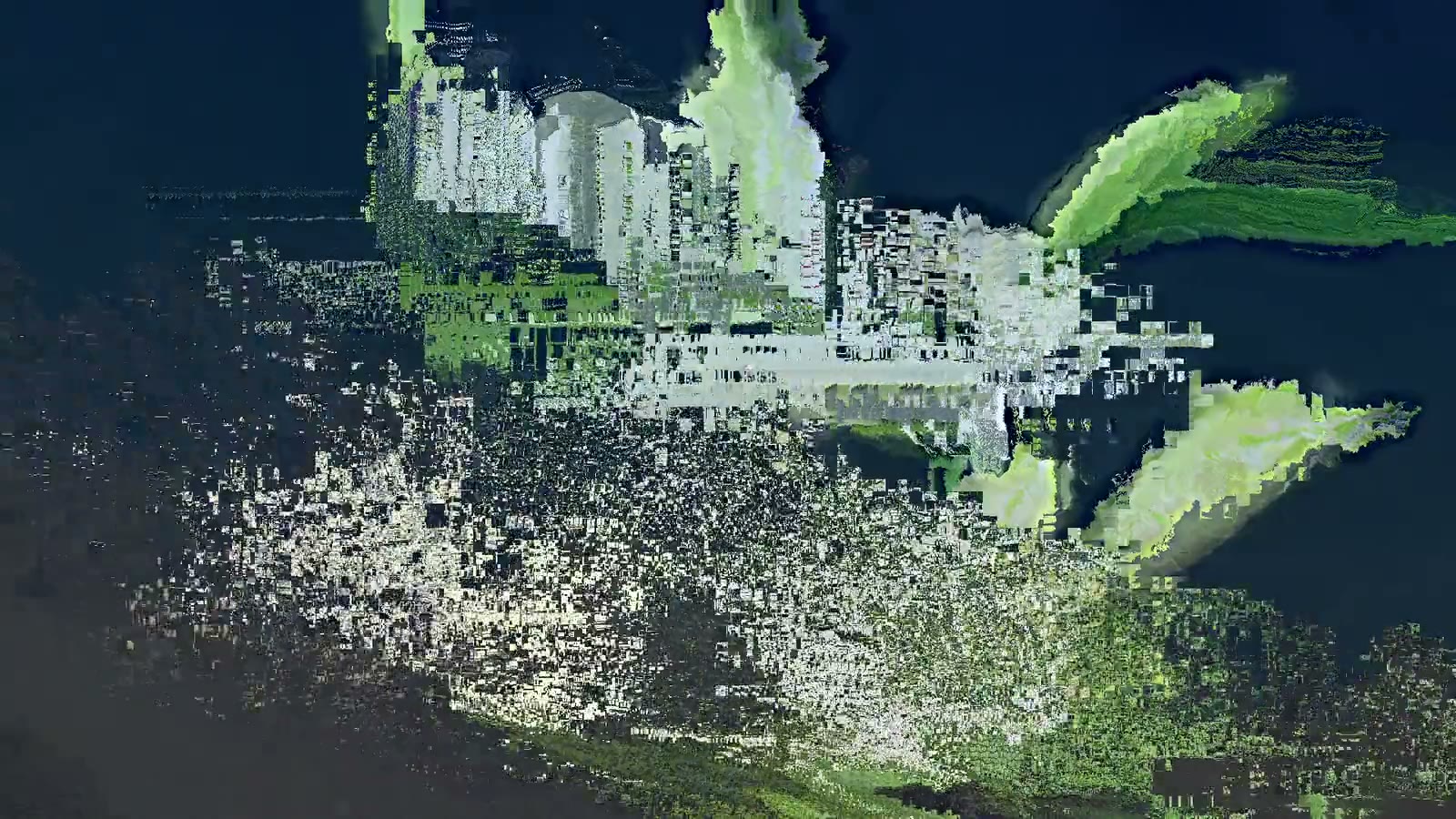
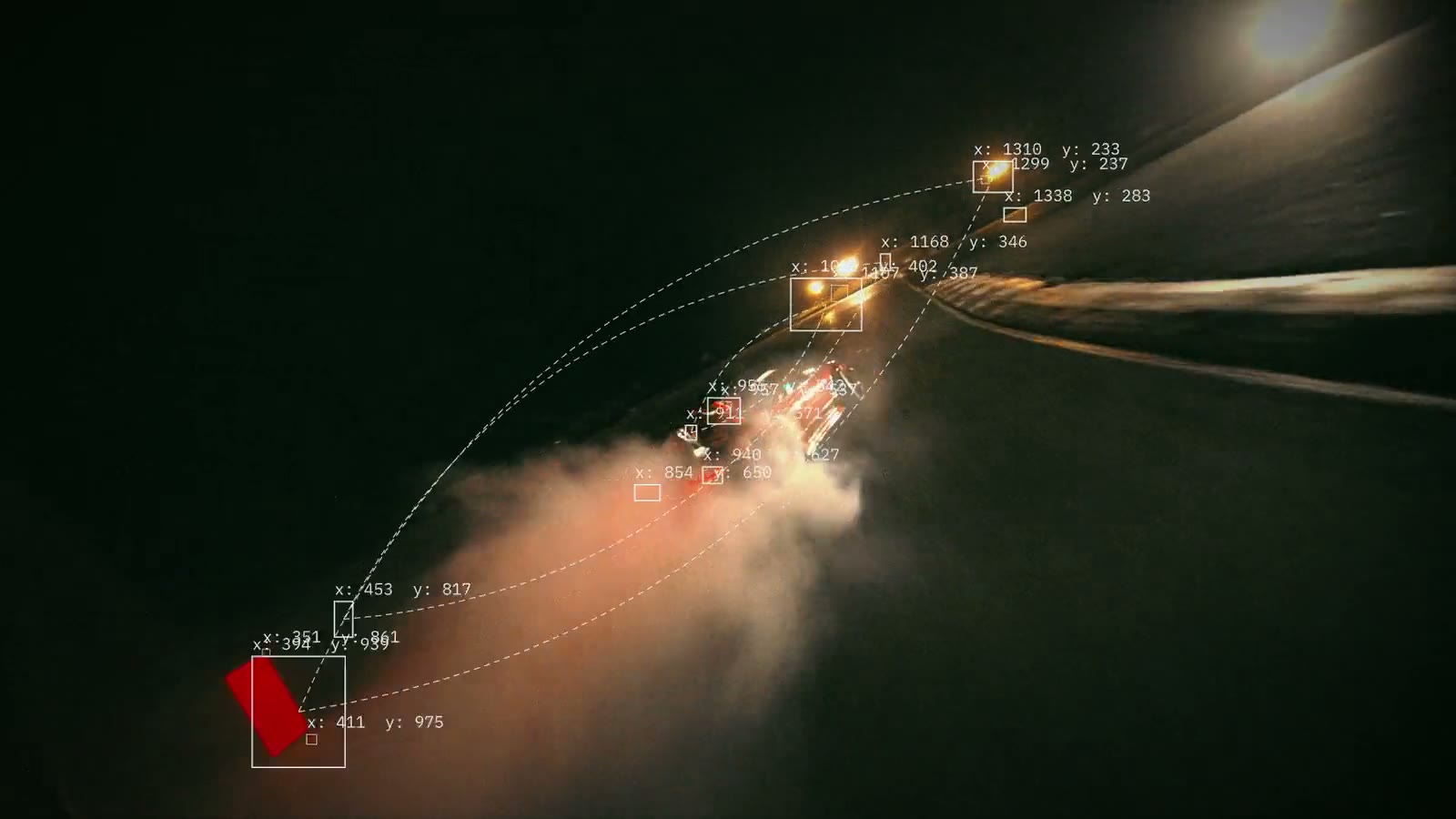
Put SHARD on the clip
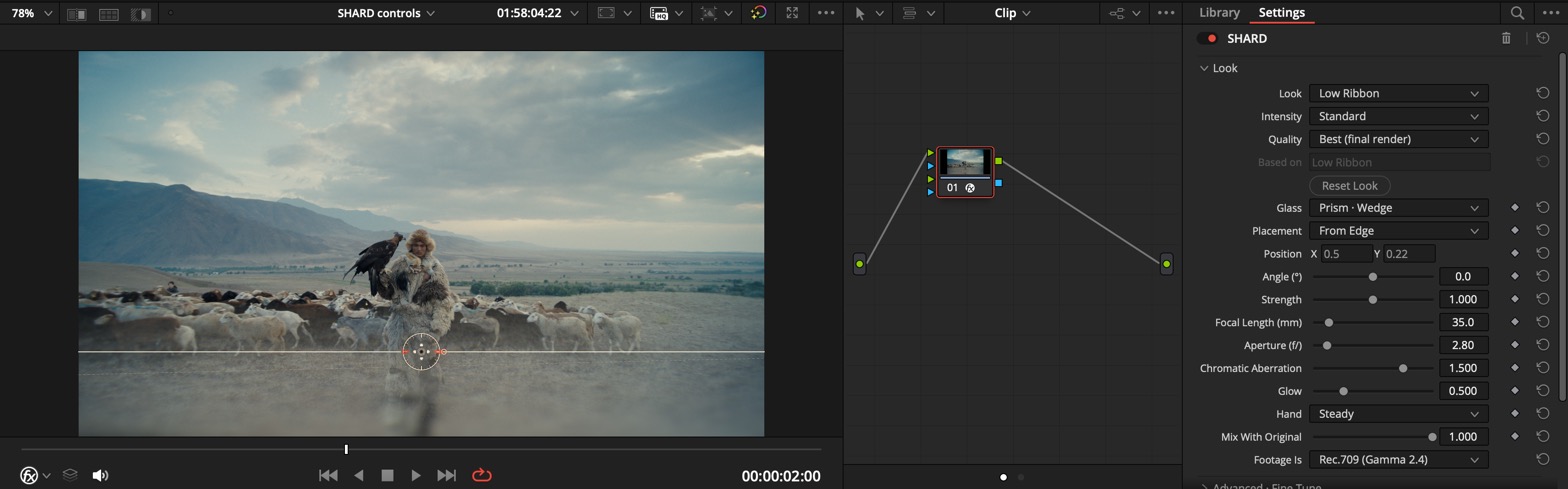
On the Color page, add a node to the clip, open Effects and drag SHARD from Paperwolf Studio onto the node. Its settings open next to the node graph.
Pick a look
The Look menu at the top has twenty looks, and each one sets every control below it. Change anything afterwards and Based on shows the look's name with "(modified)" after it.


The glass
SHARD's main controls sit in Look, right under the menu. Every example keeps Hand on Locked until the hand gets its own chapter.
Glass

What you hold in front of the lens. There are eighteen: two prisms, four faceted filters, three plates, four textured panes, two mirrors, a glass ball and two smears. The rows below the menu change with the glass, so a prism has an Angle and a faceted filter has Copies.
Placement

From Edge brings the glass in from one side. Band is a strip across the frame. Clear Centre puts glass all around and leaves the middle untouched. Whole Frame covers everything. Turn on the OpenFX overlay in the viewer to drag the glass where you want it: the centre of the dial is Position, its ring is Angle.
A glass ball
Glass Ball is the lensball: the whole scene upside down inside a sphere, and a soft blur around it.
Coverage

On the ball, how big it is in the frame. On other glass it is the width of the strip or the size of the clear centre.
Glass Material

In Advanced · Fine Tune. Denser glass bends more and throws wider rainbows, so Lead Glass splits the light at the rim of the ball further than Crown Glass does.
A broken pane
Shattered Pane holds shards of glass around a clear centre, so the subject stays sharp in the middle of the damage.
Copies

How many shards there are. Each one shows its own piece of the scene, bent its own way.
Coverage

With Placement on Clear Centre, the size of the untouched middle.
Haze

In Advanced · Fine Tune. How dirty the glass is: a soft haze over everything seen through it. At 0 the glass is spotless and only its edges catch the light.
A second clip in the glass
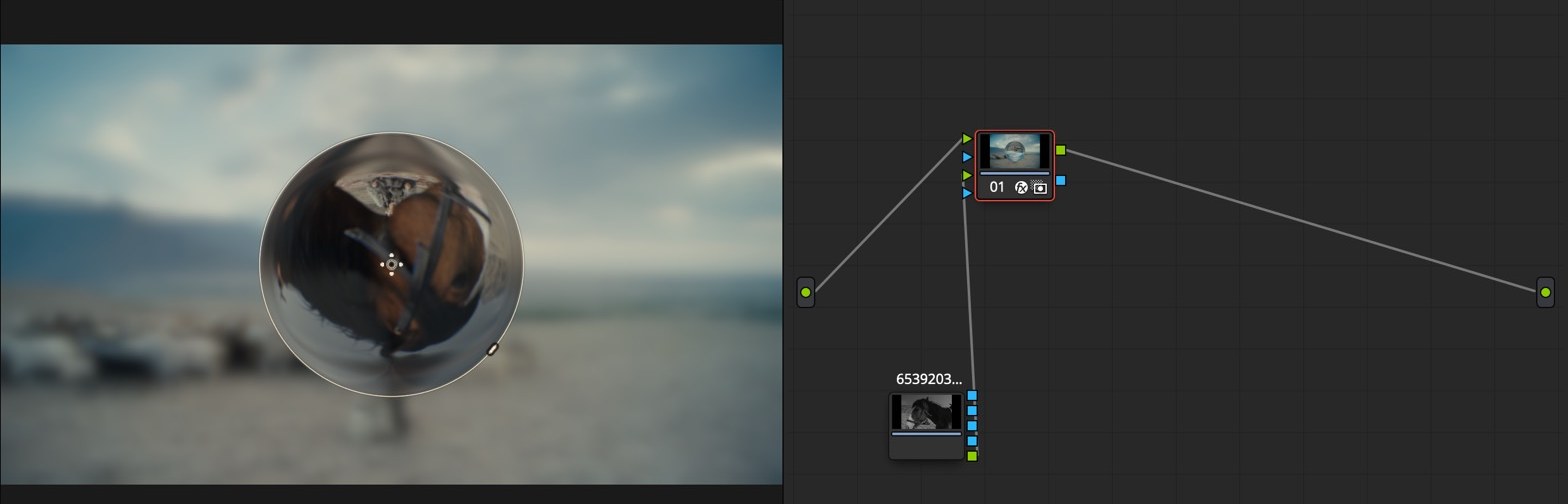
Glass bends in what sits beside the shot. With Off-frame Source on Plate Input that comes from a second clip, so a glass ball can hold a horse, city lights or a sky from another day.
On the Color page, open Media Pool and drag the second clip into the node graph, where it lands as a node of its own. Drag from the green square at the bottom of that node to the second green input on the SHARD node, then set Off-frame Source to Plate Input. Until a clip is connected, the overlay in the viewer reads "Plate not connected · using Mirror World".
Off-frame Source

In Advanced · Fine Tune. Mirror World continues your own picture past its edges. Plate Input fills the glass from the second clip, scaled to fill the frame, while everything around the glass stays your shot. Earlier Frame uses the same clip a moment ago.
A prism
Thin Prism is a triangular prism held along the bottom of the frame. It folds the sky down over the ground and splits its light.
Strength

How hard the glass bends light. 1 is real, everyday glass. Past that the picture behind it slides further and the edge gets harder to hide.
Angle

Turns the glass around its position, here through half a turn and back.
Chromatic Aberration

How far the glass splits light into colours. It is strongest on the bright parts of the shot, which is where a real prism throws its rainbows.
Aperture

SHARD treats the clip as a shot taken through a lens with the glass held in front of it. Wide open, the edge of the glass melts into a soft ribbon. Stopped down, it turns crisp and you can see where the glass ends.
Distance From Lens

In Advanced · Fine Tune. Glass held against the lens melts into the picture. Further away it shows its edges and moves more with the hand.
Copies of the subject
Three Copies is a faceted filter over the whole frame, the kind that repeats whatever is in the middle.
Copies

How many facets the filter has, and so how many times the subject repeats.
Layout

In Advanced · Fine Tune. Side by Side puts the copies next to each other. Stepped stacks the facets, each copy sliding a step further along, like a staircase.
Focal Length

The lens the shot looks like it was taken with, as a full-frame equivalent. A longer lens spreads the copies further apart and softens the edges of the glass.
Textured glass
Texture Size

On the four textured panes, how big the ripples, dimples, drops or smudge strokes are. Shown on Pool Water.
The hand holding it
Hand

How the glass is held. There are thirteen hands, from Locked and Clamped on a stand to Floating, Breathing and Frenzy. Sweep In, Sweep Across and Sweep Out bring the glass into the frame and take it away, and Sweep in Advanced · Fine Tune takes keyframes if you want to move it yourself.
Hand Amount

In Advanced · Fine Tune. Scales all the movement of the hand. Speed sets how fast it moves and Take gives you another performance by the same hand.
How much of it
Mix With Original

Blends the glass back into the untouched clip. At 0 the clip comes out exactly as it went in.
FAQ
Does SHARD work in the free version of DaVinci Resolve?
Yes, in the free version and in Studio, on macOS. We use it on the Color page, on a node of its own, so it sits wherever you want it in the grade.
Is it an overlay of filmed glass?
No. There is no footage of glass in SHARD. The glass is computed on your own clip, so the copies, the colours and the haze all come from the picture and the lights in your shot.
Can I keyframe the controls?
Yes. Every slider has a keyframe button on the Color page, and Position can be keyframed by dragging the dial in the viewer.
Does it work on log footage?
Yes. Set Footage Is to your timeline's colour space. There are fifteen, from Rec.709 and DaVinci Intermediate to the log curves of ARRI, Sony, Canon, RED, Panasonic, Fujifilm, Apple and Blackmagic, and with the right one the lamps split into colour the way they would through real glass.
Can the glass show a different clip?
Yes. Connect a second clip to SHARD's Plate input on the Color page and set Off-frame Source to Plate Input. The glass then bends that clip into your shot.
Get SHARD
SHARD has twenty looks, eighteen kinds of glass and thirteen ways of holding them. The trial has every feature with a watermark and no time limit, so you can try it on your own footage first.